
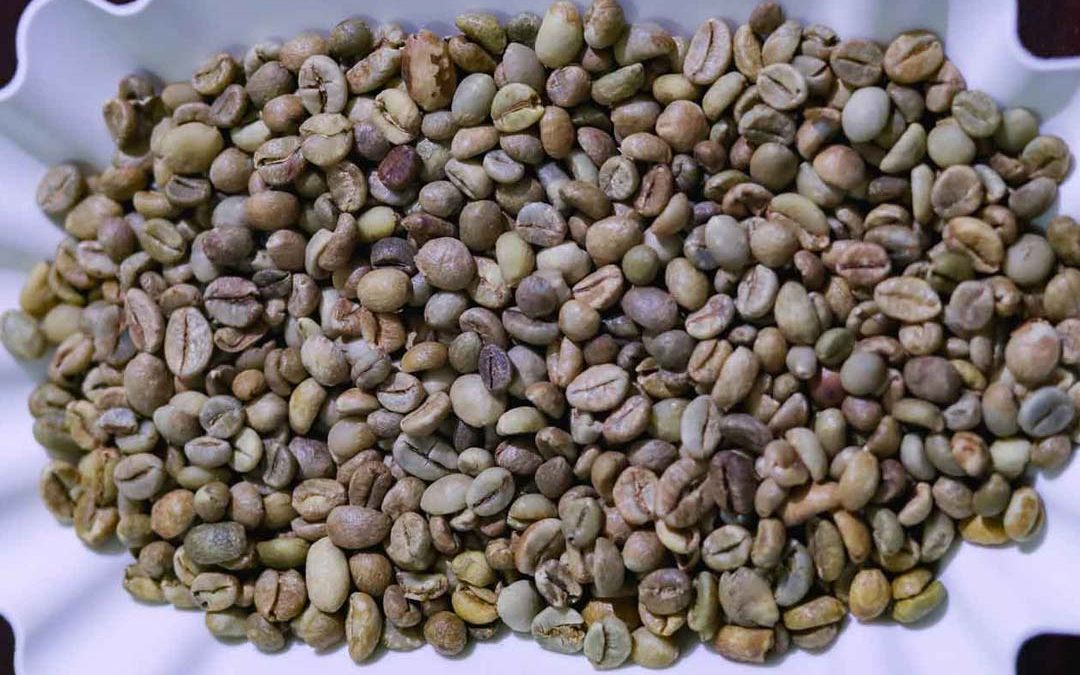
When people talk about Sumatran coffee, they usually mean Arabica: Mandheling, Gayo, Lintong. But Sumatra robusta has a story of its own, and in North Sumatra, one name stands out above the rest: Sidikalang. Strong, aromatic and full bodied, Sidikalang Robusta has been a favorite in Indonesian homes and coffee shops for generations, and it’s increasingly finding its way into espresso blends around the world.
We supply Robusta from Sidikalang alongside our highland Arabicas, so we know it well. This guide covers where Sumatra robusta grows, what makes Sidikalang special, how it’s processed and how it tastes, how roasters use it, and what to look for when you buy it as green coffee.
Sumatra robusta at a glance
| Species | Robusta (Coffea canephora) |
| Main regions | Lampung, South Sumatra and Bengkulu in the south; Sidikalang in the north |
| Sidikalang location | Dairi Regency, North Sumatra, west of Lake Toba |
| Process | Mostly natural (dry processed) |
| Cup profile | Bold, full body, low acidity, cocoa, earthy, woody, bitter-sweet finish |
| Best uses | Espresso blends, milk drinks, traditional Indonesian coffee, instant coffee |
| Export port | Belawan, Medan |
Where Sumatra robusta grows
Robusta arrived in Sumatra in the early 1900s, after coffee leaf rust devastated Indonesia’s Arabica farms. It was tougher, more productive and resistant to the disease, and it spread quickly. Today Sumatra grows most of Indonesia’s Robusta.
Most of it comes from the south of the island. Lampung, South Sumatra and Bengkulu form the country’s Robusta heartland, producing large volumes for instant coffee and commercial blends. In the north, Robusta grows on a smaller scale, and the best known area is Sidikalang. Our guide to Sumatra coffee regions maps out the whole island.
Sidikalang: North Sumatra’s Robusta country

Sidikalang is the main town of Dairi Regency, in the hills on the western side of Lake Toba. The landscape is all mountains and valleys, mostly between about 700 and 1,250 meters above sea level, with fertile volcanic soil and steady rainfall. Coffee is one of the area’s most important crops, and Dairi grows both Robusta and Arabica, though Robusta makes up the larger share.
Sidikalang coffee has a special place in local culture. There’s a well-known folk saying that this coffee can “drive away debts.” The story goes back to hard times, when many farmers kept their families afloat by growing it. Across North Sumatra, “Kopi Sidikalang” is a familiar name, known for its strong, fragrant cup.
That reputation has been backed by better farming in recent years. A study in Lokawati: Jurnal Penelitian Manajemen dan Inovasi Riset by Manullang and Ibelala (2023) found that Sidikalang Robusta prices rose as quality improved, helped by younger farmers being more careful in choosing seedlings, fertilizer and land.
How Sidikalang Robusta is processed
Most Sidikalang Robusta is natural processed. Farmers pick the ripe cherries and dry them whole in the sun, on patios, tarps or raised beds, turning them regularly until they’re fully dry. The dried fruit is then hulled off to reveal the green bean. Drying with the fruit on adds sweetness and body, which helps balance Robusta’s natural bitterness.
Careful picking and drying make a huge difference with Robusta. Unripe cherries or slow, uneven drying lead to harsh, rubbery or musty flavors, which is where Robusta’s poor reputation often comes from. Well-picked, well-dried lots taste clean and chocolatey instead. Read more in our guides to the natural process and coffee processing in general.
What Sumatra robusta tastes like
Sidikalang Robusta is bold and full bodied, with low acidity and a strong, lingering aroma. Expect dark cocoa, earthy and woody tones, roasted grain and a bitter-sweet finish, sometimes with a hint of spice. It’s stronger and more bitter than Arabica, but a good lot is smooth rather than harsh.
It also packs more caffeine. Robusta beans typically contain almost twice as much caffeine as Arabica. Our Arabica vs Robusta guide explains the differences in detail.
How roasters use Sumatra robusta
| Use | Why it works |
|---|---|
| Espresso blends | A share of 10–30% Robusta adds body, thick crema and more caffeine |
| Milk drinks | Its strength cuts through milk and sugar |
| Traditional Indonesian coffee | Classic for kopi tubruk and sweet iced coffee |
| Single origin Robusta | Good lots make bold, chocolatey espresso on their own |
| Instant and ready-to-drink | High yield, high caffeine and strong flavor |
Robusta usually roasts best at medium to medium-dark levels, which soften its bitterness and bring out cocoa and caramel. Very light roasts can taste grainy or raw. For tips on dialing in a blend, see our guide to the variables of espresso extraction.
Buying Sumatra robusta green coffee
A few questions help you compare offers:
- Which region? Sidikalang Robusta and southern Sumatran Robusta are different coffees, at different price points.
- Which grade? Grade 1 has the fewest defects; Grade 4 is common for commercial use. Our guide to Indonesian coffee grades explains the system.
- Moisture. Around 12%. Naturals that aren’t dried well are prone to mold.
- Picking. Ask whether the coffee was selectively picked. Ripe cherries make a much cleaner cup.
- A sample. Always cup it. Our guides to green beans coffee sampling and coffee cupping show how.
Our Sumatra robusta
| Item | Details |
|---|---|
| Origin | Sidikalang, Dairi Regency, North Sumatra |
| Process | Natural |
| Grades | Grade 1, Grade 2, Grade 4 |
| Cup profile | Strong aroma, bold and bitter-sweet, full body |
| Packing | 60 kg jute bags |
| Price terms | FOB, CFR, CIF (negotiable) |
| Payment | L/C or bank transfer |
| Loading port | Belawan, Medan |
We also supply commercial grade coffee for manufacturing. See all our origins on the Coffee Offerings page, and if you’re buying from Indonesia for the first time, our guide on how to import coffee from Indonesia covers the whole process.
Try our Sidikalang Robusta
Request a sample and taste what Sumatra robusta can add to your espresso blends.
Frequently asked questions
What is Sumatra robusta?
Sumatra robusta is Robusta coffee grown on the Indonesian island of Sumatra. Most comes from Lampung, South Sumatra and Bengkulu in the south, while Sidikalang in North Sumatra is the best known northern origin.
Where is Sidikalang coffee from?
Sidikalang is the main town of Dairi Regency in North Sumatra, west of Lake Toba. The area grows both Robusta and Arabica, but it’s most famous for its Robusta.
What does Sidikalang Robusta taste like?
Bold and full bodied, with low acidity, dark cocoa, earthy and woody notes, and a bitter-sweet finish.
Is Sumatra robusta good for espresso?
Yes. In blends, it adds body, crema and caffeine. Good lots also make a strong, chocolatey single origin espresso.
How is Sidikalang Robusta processed?
Mostly by the natural method: whole cherries are dried in the sun, then the dried fruit is hulled off.
Does Robusta have more caffeine than Arabica?
Yes. Robusta usually has almost twice as much caffeine as Arabica.
CV. Buah Berdikari is a coffee trading and exporting company based in North Sumatra, Indonesia. We source Arabica and Robusta green coffee from North Sumatra and Aceh and help roasters and importers find the lots that fit what they’re making.