
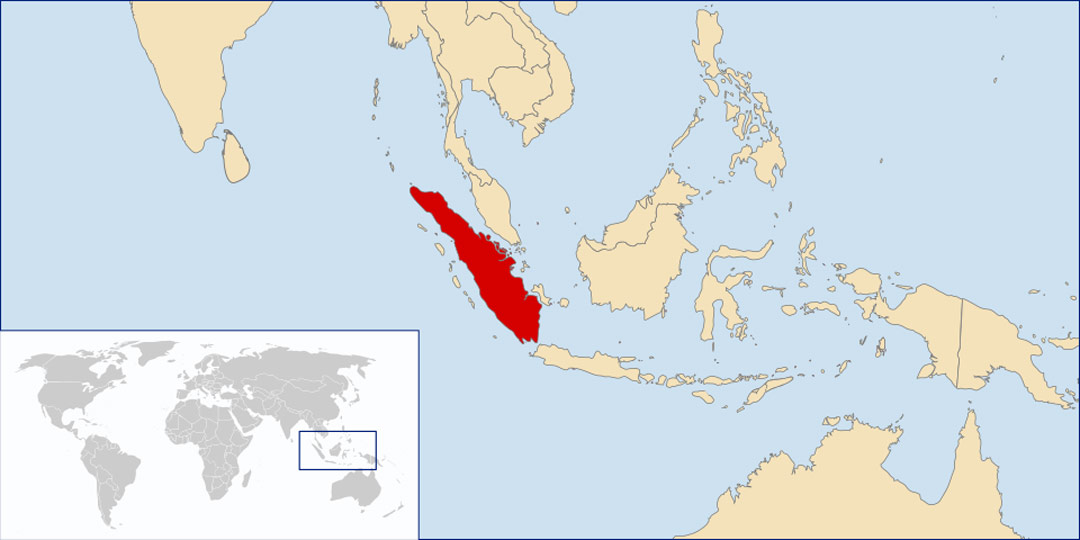
Few coffee origins have a reputation as strong, or as distinctive, as Sumatra coffee. Say “Sumatra” to a roaster and they’ll picture a heavy, syrupy cup with low acidity and deep notes of chocolate, cedar, earth and spice. It’s a style that stands apart from the bright coffees of Africa and Central America, and it has made Sumatra one of the most recognized coffee names in the world.
But Sumatra isn’t one coffee. It’s an island larger than California, with highland Arabica regions in the north, Robusta plains in the south, and a dozen growing areas in between, each with its own character. We’re based in North Sumatra and source from these hills, so this guide is our map of the island’s coffee: where it grows, how it’s processed, how the regions differ, and what to look for when you buy.
Sumatra coffee at a glance
| Island | Sumatra, Indonesia’s westernmost large island |
| Arabica regions | Gayo (Aceh), Mandheling, Lintong, Sidikalang, Simalungun (North Sumatra), Solok, Kerinci |
| Robusta regions | Lampung, South Sumatra, Bengkulu, plus Sidikalang in the north |
| Main Arabica process | Wet hulled (giling basah) |
| Typical cup | Heavy body, low acidity, chocolate, earth, cedar, spice |
| Main export port in the north | Belawan, Medan |
| Who grows it | Mostly smallholder farmers on small family plots |
A short history of Sumatra coffee
Coffee came to Indonesia with the Dutch in the late 1600s, first to Java. By the 1870s, the colonial government had pushed cultivation into Sumatra. Arabica was planted near Lake Toba in 1888 and in the Gayo highlands of Aceh in the 1920s.
Then came coffee leaf rust, a fungal disease that swept through Indonesia’s Arabica farms in the late 1800s and wiped out much of the old Typica stock. Farmers in the lowlands turned to the hardier Robusta, which reached Sumatra in the early 1900s and spread quickly across the south of the island. Arabica survived in the cooler highlands, where it still grows today. You can read the wider story in our post on coffee history, and Wikipedia’s article on coffee production in Indonesia gives a detailed overview.
What makes Sumatra coffee taste the way it does
Three things give Sumatra coffee its character.
The land. The Bukit Barisan mountains run down the length of the island, with volcanic soil, heavy rainfall and highland plateaus between 1,000 and 1,600 meters where Arabica thrives.
The farmers. Almost all Sumatra coffee is grown by smallholders on family plots, often less than a hectare, usually under shade trees and mixed with other crops. A peer-reviewed study of North Sumatra’s Arabica sector by Saragih (2013) in the Asian Journal of Agriculture and Rural Development found that the province produced about a third of Indonesia’s Arabica, almost entirely from smallholder farms averaging under one hectare. Our post on coffee farming looks at how these farms work.
The process. Most Sumatran Arabica is wet hulled, known locally as giling basah. Farmers pulp and partly dry their coffee, then collectors strip off the parchment while the beans are still damp and dry them again. This is the main reason Sumatra coffee has such a heavy body, low acidity and earthy, herbal notes, and why the green beans have a bluish-green color. Our coffee processing guide explains how it compares with other methods.

Photo by Katya Austin on Unsplash
Sumatra coffee regions
Here’s how the island’s main coffee regions compare, from north to south.
| Region | Province | Species | Typical character |
|---|---|---|---|
| Gayo | Aceh | Arabica | Syrupy body, medium acidity, chocolate, spice, citrus |
| Mandheling | North Sumatra | Arabica | Very heavy body, low acidity, dark chocolate, earth, cedar |
| Lintong | North Sumatra | Arabica | Full body, herbal, sweet tobacco, a little brighter |
| Sidikalang | North Sumatra | Arabica and Robusta | Bold and aromatic; known especially for its Robusta |
| Simalungun | North Sumatra | Arabica | Full body, sweet, part of the wider Mandheling group |
| Solok | West Sumatra | Arabica | A smaller Arabica region with a growing specialty following |
| Kerinci | Jambi | Arabica and Robusta | Grown around Mount Kerinci, with a growing specialty following |
| Lampung, South Sumatra, Bengkulu | Southern Sumatra | Mostly Robusta | Strong, bold, the backbone of Indonesia’s Robusta exports |
Gayo, Aceh
At the northern tip of the island, the Gayo Highlands around Takengon and Lake Laut Tawar produce some of Indonesia’s most celebrated Arabica. Gayo is usually a little cleaner and brighter than other Sumatran coffees, with citrus notes alongside the chocolate and spice. It’s protected as a Geographical Indication in Indonesia and the European Union. Read our full guide to Gayo coffee.
Mandheling, North Sumatra
Mandheling is Sumatra’s most famous coffee name. It comes from the Mandailing people of Tapanuli, and today it’s used as a trade name for Arabica from the North Sumatra highlands. Expect the classic Sumatran profile at its fullest: very heavy body, low acidity and deep chocolate and earthy notes. Read our guide to Sumatra Mandheling coffee.
Lintong, North Sumatra
Lintong coffee grows on a high plateau around Lintong Nihuta, southwest of Lake Toba. It shares Mandheling’s heavy body but is often described as a little more herbal and complex, with notes of sweet tobacco and cedar. Many roasters buy it as a distinct single origin.
Sidikalang, North Sumatra
In the hills of the Dairi district, Sidikalang produces both Arabica and Robusta. Its Robusta has a strong local reputation for its rich aroma and bold, bitter character, and some older Typica Arabica still grows at higher altitudes here.
Southern Sumatra
Lampung, South Sumatra and Bengkulu form Indonesia’s Robusta heartland. Together they produce around half of the country’s coffee and the large majority of its Robusta, mostly for instant coffee and espresso blends. See how the two species differ in our Arabica vs Robusta guide.
How Sumatra coffee tastes
The classic Sumatra coffee is heavy, smooth and low in acidity, with deep notes of dark chocolate, cedar, earth and spice. Good lots are sweet and clean, with the earthiness in balance rather than overpowering. Some, especially from Gayo, show brighter citrus or tropical fruit notes.
That profile makes Sumatra a favorite for espresso and milk drinks, where its body and chocolate cut through. It’s also one of the few origins that holds up well to darker roasts.
Buying Sumatra coffee
When you’re buying Sumatran green coffee, it helps to ask:
- Which region? Gayo, Mandheling and Lintong taste noticeably different.
- Which process? Most Arabica is wet hulled, but washed and natural lots are increasingly available.
- Which grade? Grade 1 Triple Pick is the top export preparation. Our guide to Indonesian coffee grades explains the labels.
- Moisture and crop year. Around 12% moisture and the latest harvest.
- A sample. Cup before you commit. Our guides to green beans coffee sampling and coffee cupping show how.
If you’re buying from origin for the first time, our step-by-step guide on how to import coffee from Indonesia covers contracts, shipping terms and documents.
Our Sumatra coffees

| Coffee | Region | Process | Grades |
|---|---|---|---|
| Arabica Mandheling | North Sumatra | Semi-washed (wet hulled) | Grade 1 TP, 1 DP, 2, 4 |
| Arabica Gayo | Aceh | Semi-washed (wet hulled) | Grade 1 TP, 1 DP, 2, 4 |
| Arabica Lintong | North Sumatra | Ask us for current lots | Ask us for current lots |
| Robusta Sumatra | Sidikalang, North Sumatra | Natural | Grade 1, 2, 4 |
Everything ships in 60 kg jute bags from Belawan port in Medan, on FOB, CFR or CIF terms. See full details on our Coffee Offerings page.
Taste the regions of Sumatra
Request samples of our Mandheling, Gayo, Lintong and Sumatra Robusta and cup them side by side.
Frequently asked questions
What is Sumatra coffee?
Sumatra coffee is coffee grown on the Indonesian island of Sumatra. It usually refers to Arabica from the northern highlands, known for a heavy body, low acidity and notes of chocolate, earth, cedar and spice.
Why does Sumatra coffee taste earthy?
Mainly because of wet hulling, the local processing method, along with the island’s volcanic soil and smallholder farming. A clean earthy note is typical; a musty one is a defect.
What are the best-known Sumatra coffee regions?
For Arabica: Gayo in Aceh, and Mandheling, Lintong and Sidikalang in North Sumatra. For Robusta: Lampung, South Sumatra and Bengkulu in the south.
Is Sumatra coffee Arabica or Robusta?
Both. The northern highlands grow mostly Arabica, while southern Sumatra is Indonesia’s main Robusta region.
Is Sumatra coffee good for espresso?
Yes. Its heavy body, low acidity and chocolate notes make it a favorite for espresso and milk drinks, either as a single origin or in blends.
What is the difference between Mandheling and Gayo?
Both are wet hulled Sumatran Arabicas. Mandheling, from North Sumatra, is usually heavier and earthier. Gayo, from Aceh, tends to be cleaner and brighter, with citrus notes.
CV. Buah Berdikari is a coffee trading and exporting company based in North Sumatra, Indonesia. We source Arabica and Robusta green coffee from North Sumatra and Aceh and help roasters and importers find the lots that fit what they’re making.