

Look at any offer sheet for Indonesian green coffee and you’ll see labels like “Grade 1 TP,” “Grade 1 DP,” “Grade 4” or “Asalan.” To someone new to Indonesian coffee grades, they can look like a code. They’re actually simple once you know the system behind them, and understanding it helps you compare offers fairly, set the right price expectations and avoid surprises when the coffee arrives.
We grade and ship coffee from North Sumatra, so these labels are part of our everyday language. This guide explains how Indonesia grades green coffee, what each grade means, how defects are counted, what Triple Pick and Double Pick really mean, and how Indonesian grades compare with specialty standards.
Indonesian coffee grades at a glance
| Standard | SNI 01-2907-2008 (Indonesian National Standard for green coffee) |
| How it works | Defects in a 300 g sample are counted and given points |
| Grades | Grade 1 (best) to Grade 6 |
| Grade 1 limit | No more than 11 defect points per 300 g |
| Moisture | Maximum 12.5% |
| Trade labels | TP (Triple Pick) and DP (Double Pick) describe hand sorting |
| What grade doesn’t tell you | How the coffee tastes |
How Indonesia grades green coffee
Indonesia is one of the world’s largest coffee producers (Wikipedia has a good overview of coffee production in Indonesia), and it grades its green coffee under a national standard, SNI 01-2907-2008. It applies to both Arabica and Robusta and is the basis for the grades you’ll see on most Indonesian export contracts.
The system is a defect count. A grader takes a 300 g sample of green coffee and sorts out every defective bean and every piece of foreign matter. Each type of defect carries a set number of points. Add up the points and the total tells you the grade. Fewer points means cleaner coffee and a higher grade.
Before any coffee can be graded at all, it has to meet a few general requirements. According to the standard, as summarized in a study by Handayani (2013) in Jurnal Litbang Provinsi Jawa Tengah, the coffee must have:
- no live insects
- no rotten or moldy smell
- moisture of no more than 12.5%
- dirt of no more than 0.5% by weight
The Indonesian coffee grades table
| Grade | Defect points per 300 g | Typical use |
|---|---|---|
| Grade 1 | Up to 11 | Specialty and premium single origin |
| Grade 2 | 12–25 | Quality single origin and good blends |
| Grade 3 | 26–44 | Blends |
| Grade 4a | 45–60 | Commercial blends |
| Grade 4b | 61–80 | Commercial blends |
| Grade 5 | 81–150 | Lower commercial and industrial use |
| Grade 6 | 151–225 | Industrial use |
Most Indonesian Arabica sold to roasters abroad is Grade 1. Grade 4 is common for commercial coffee and Robusta. Grades 5 and 6 mostly go to industrial uses such as instant coffee.
How defects are counted
Not all defects are equal. A fully black bean hurts the cup far more than a bean with a small insect hole, and a stone in a sack is worse than both. The SNI gives each defect a value to reflect that.
| Defect | Points |
|---|---|
| 1 black bean | 1 |
| 1 partly black bean | 1/2 |
| 1 broken black bean | 1/2 |
| 1 whole dried cherry | 1 |
| 1 brown (sour) bean | 1/4 |
| 1 large piece of husk | 1 |
| 1 medium piece of husk | 1/2 |
| 1 small piece of husk | 1/5 |
| 1 bean still in parchment | 1/2 |
| 1 large piece of parchment | 1/2 |
| 1 medium piece of parchment | 1/5 |
| 1 small piece of parchment | 1/10 |
| 1 broken bean | 1/5 |
| 1 immature bean | 1/5 |
| 1 bean with one insect hole | 1/10 |
| 1 bean with more than one hole | 1/5 |
| 1 spotted bean | 1/10 |
| Large stone, twig or clump of soil | 5 |
| Medium stone, twig or clump of soil | 2 |
| Small stone, twig or clump of soil | 1 |
If one bean has more than one defect, only the most serious one is counted. So a broken bean that’s also black counts as a broken black bean, not twice.
Grading also looks at bean size. Beans are passed through sieves and sorted into size classes, because evenly sized beans roast more evenly. Size is usually listed alongside the grade on an offer sheet.
What Triple Pick and Double Pick mean
You’ll often see Grade 1 coffee sold as “Grade 1 TP” or “Grade 1 DP.” These labels aren’t part of the SNI itself. They’re trade terms that describe how carefully the coffee was hand sorted after machine cleaning.
- TP, Triple Pick: the coffee has been hand sorted three times. It has the fewest visible defects, the most even appearance and usually the cleanest cup. It’s the top export preparation for Sumatran Arabica.
- DP, Double Pick: the coffee has been hand sorted twice. It’s still Grade 1 and a good balance of quality and price.
Sorting is done on long tables, mostly by hand, with workers picking out black, broken and damaged beans one by one. Every extra pass adds labor and reduces the weight of saleable coffee, which is why TP costs more than DP.
What “Asalan” means
“Asalan” is coffee as it comes from the farmer, before the exporter’s sorting and grading. It often contains more defects, foreign matter and uneven moisture than export grades allow. Coffee with more than 225 defect points per 300 g falls below Grade 6 and is also called asalan. Exporters buy asalan coffee, then clean, dry, sort and grade it into the export grades above.
Indonesian grades vs specialty standards
The Specialty Coffee Association uses its own green grading system. It counts defects in a 350 g sample and splits them into serious (Category 1) and less serious (Category 2) defects. To be considered specialty grade, coffee must also score 80 points or more on the cupping table.
The two systems don’t map perfectly, but a well-prepared Indonesian Grade 1 TP is the starting point for most Indonesian specialty coffee. The key difference is that the SNI grade only measures physical quality. Specialty status depends on how the coffee tastes too.
Grade isn’t everything
A grade tells you how clean a coffee looks. It doesn’t tell you whether it tastes sweet, balanced or interesting. Two Grade 1 lots can taste completely different, and a Grade 1 coffee can still have a fermented or musty cup if it was handled badly.
That’s why grade, moisture and cupping go together. Our guides to green beans coffee sampling and coffee cupping explain how to check both, and our green coffee facts guide covers the basics of green beans.
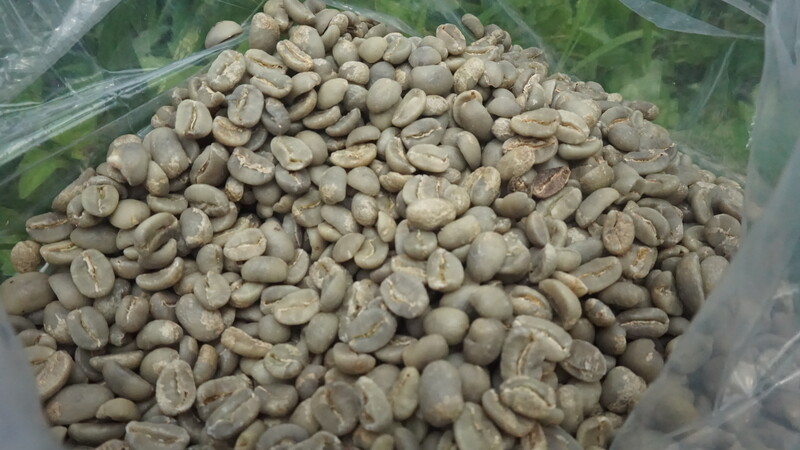
Processing also affects how a coffee looks when it’s graded. Wet hulled Sumatran Arabica has a dark, bluish-green color that’s completely normal, not a defect. See our guide to coffee processing for why.
Which grade should you buy?
| If you’re making… | Consider |
|---|---|
| Specialty single origin | Grade 1 TP |
| Quality single origin at a better price | Grade 1 DP |
| House blends and espresso bases | Grade 1 DP or Grade 2 |
| Commercial blends | Grade 4 |
| Instant or industrial coffee | Grade 4 to Grade 6 |
Our grades
We export Arabica from Mandheling and Gayo in Grade 1 TP, Grade 1 DP, Grade 2 and Grade 4, and Sumatra Robusta in Grade 1, Grade 2 and Grade 4. We also supply commercial grade coffee for manufacturing. You can see every origin and grade on our Coffee Offerings page, and if you’re buying from Indonesia for the first time, our guide on how to import coffee from Indonesia walks through the whole process.
Compare our grades side by side
Request samples of different grades and see the difference on your own sorting table and in the cup.
Frequently asked questions
What are Indonesian coffee grades?
They’re quality grades set by the Indonesian National Standard SNI 01-2907-2008. Coffee is graded from Grade 1 to Grade 6 based on the number of defect points in a 300 g sample.
What does Grade 1 coffee mean?
Grade 1 is Indonesia’s top grade. The coffee has no more than 11 defect points in a 300 g sample.
What does TP mean in coffee?
TP stands for Triple Pick. The coffee has been hand sorted three times to remove defective beans. DP, Double Pick, means it was sorted twice.
Is Grade 1 the same as specialty coffee?
Not automatically. Grade 1 means the coffee is physically clean. Specialty status also requires a cupping score of 80 points or more.
What is asalan coffee?
Asalan is coffee as it comes from farmers, before sorting and grading. Coffee with more than 225 defect points per 300 g is also called asalan.
What moisture level is allowed for Indonesian green coffee?
The national standard allows a maximum of 12.5% moisture. Most exporters aim for around 12%.
CV. Buah Berdikari is a coffee trading and exporting company based in North Sumatra, Indonesia. We source Arabica and Robusta green coffee from North Sumatra and Aceh and help roasters and importers find the lots that fit what they’re making.