
Wet hulled coffee is the reason Sumatran coffee tastes like nothing else. Known in Indonesia as giling basah, and often sold as “semi-washed,” it’s a way of processing coffee where the beans are stripped of their parchment while they’re still wet. That single step gives Sumatra its famous heavy body, low acidity and earthy, herbal flavor, and it gives the green beans their unusual dark, bluish-green color.
Most of the Arabica we export from North Sumatra and Aceh goes through this process, so it’s something we deal with every day. This guide explains what wet hulling is, how it works step by step, why Indonesian farmers use it, how it changes the cup, the risks to watch for, and what roasters should know when buying wet hulled coffee.
Wet hulled coffee at a glance
| Local name | Giling basah (“wet grinding”) |
| Also called | Semi-washed, wet hulled, Sumatra process |
| Where it’s used | Mainly Sumatra; also Sulawesi, Flores and Papua |
| Key step | Parchment removed while the bean is still wet |
| Moisture at hulling | Roughly 30–50%, compared with 10–12% for other methods |
| Final moisture | About 12% for export |
| Typical cup | Heavy body, low acidity, earthy, herbal, chocolate, spice |
| Green bean look | Dark, bluish green |
What is wet hulled coffee?
Every coffee bean grows inside a cherry, wrapped in layers: skin, fruit pulp, sticky mucilage, a papery shell called parchment, and a thin silverskin. Processing removes those layers and dries the bean.
In most of the coffee world, beans dry inside their parchment until they reach about 10–12% moisture, and only then is the parchment hulled off. Wet hulling flips that order. The parchment comes off early, while the bean is still soft and damp, and the naked bean then finishes drying on its own. In Indonesian, the process is called giling basah, which literally means “wet grinding.”
It’s used by most smallholder farmers in Sumatra, and also in Sulawesi, Flores and Papua. That’s why so many Indonesian coffees share a family resemblance in the cup.
How the wet hulling process works
Wet hulling is usually a team effort between farmers, collectors and exporters. The details vary from village to village, but the main steps look like this:
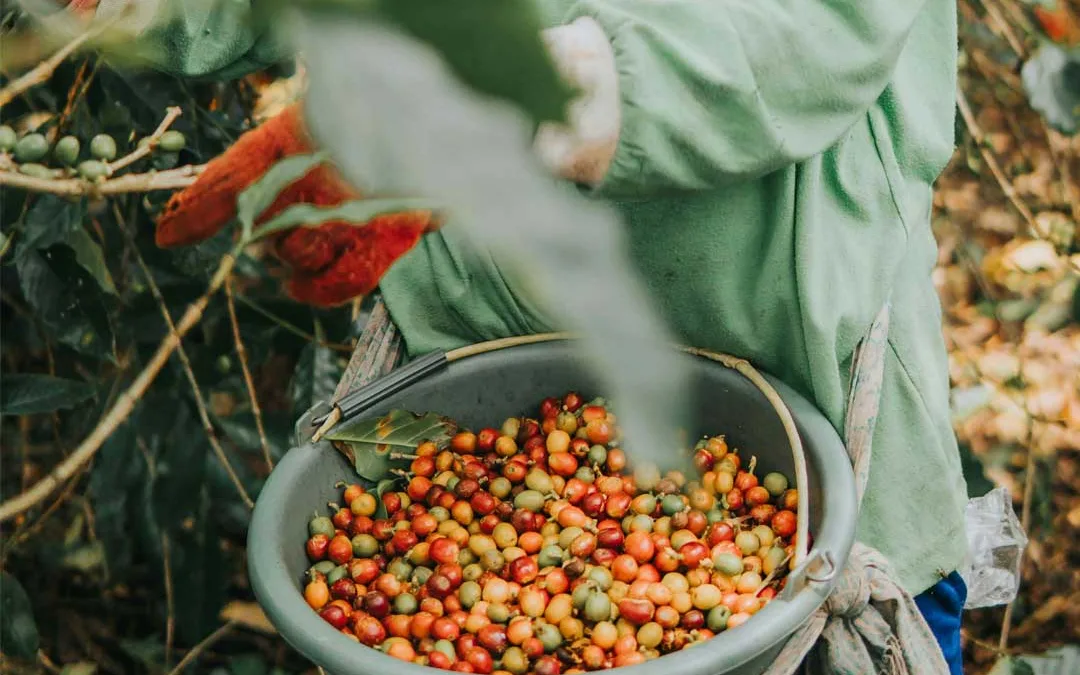
- Picking. Farmers hand pick ripe cherries, often in several rounds over the harvest.
- Pulping. The skin and fruit are removed, usually at home with a small hand-cranked or motorized pulper, the same day or the next.
- Short fermentation. The pulped beans rest, often overnight, in tanks, buckets or sacks so the sticky mucilage loosens.
- Washing. The beans are rinsed to remove most of the mucilage.
- Partial drying. The parchment coffee is dried briefly, often for just a few hours to a day. It’s still very wet, at roughly 30–50% moisture.
- Selling to a collector. Many farmers sell at this stage to a local collector, which gives them cash quickly.
- Wet hulling. The collector runs the damp coffee through a special wet huller that strips off the parchment.
- Final drying. The exposed green beans are dried, usually in the sun, down to about 12% moisture.
- Sorting and grading. Exporters clean, sort, hand pick and grade the coffee, then bag it in 60 kg jute bags for shipment.

Credit: crema-coffee.com
Why Sumatra uses wet hulling
Wet hulling grew out of practical needs rather than flavor goals.
The climate. Sumatra is humid, cloudy and rainy for much of the year. Drying coffee fully inside its parchment can take weeks, and in wet weather it may never dry properly. Taking the parchment off early lets the bean dry much faster.
Cash flow. Most Sumatran coffee is grown by smallholders on small plots. Selling wet parchment coffee to a collector within a day or two of picking gives farmers income quickly, instead of tying up their crop for weeks.
Tradition and infrastructure. Over generations, a whole network of collectors, wet hullers and drying yards has grown up around the method. It fits the way coffee moves from remote farms to the port.
The distinctive flavor came along with it. Buyers learned to love it, and today it’s what the world expects from Sumatra.
How wet hulling changes the coffee
In the cup
Wet hulled coffee is known for a full, syrupy body and low acidity. Typical flavors include dark chocolate, earth, herbs, cedar and spice. Done well, it’s sweet, deep and smooth. Done badly, it can turn musty, moldy or dirty.
Research on Gayo coffee supports what buyers taste. A study by Abubakar, Karim and Fahlufi (2011), published in the Proceedings of the Annual International Conference of Syiah Kuala University, compared Arabica processed by wet hulling with dry hulling. Tasting panels scored the wet hulled coffee higher, and the Tim Tim variety came out best overall.
In the green bean
Because the bean dries without its parchment, it turns a dark, bluish-green color. That’s normal, not a defect. Soft, wet beans can also get squeezed in the huller, which sometimes leaves a split at one end called a “goat’s foot.” A few of these are common in Sumatran coffee; lots of them point to rough handling.
Wet hulled vs washed vs natural
| Wet hulled | Washed | Natural | |
|---|---|---|---|
| Fruit removed | Before drying | Before drying | After drying |
| Parchment removed | While wet (30–50% moisture) | After drying (10–12%) | Hulled with the dried fruit |
| Drying time | Shorter | Longer | Longest |
| Body | Heavy | Light to medium | Medium to heavy |
| Acidity | Low | Bright | Medium |
| Typical flavors | Earthy, herbal, chocolate, spice | Clean, floral, fruity, clear origin notes | Fruity, sweet, sometimes winey |
| Bean color | Dark, bluish green | Pale green | Yellowish green |
Read more about the other methods in our guides to the washed process, the natural process and the honey process, or see them all compared in our coffee processing hub.
Risks and quality control
Wet hulling is fast, but it leaves the bean exposed. Without parchment, beans are more sensitive to rain, humidity, dirt and uneven drying. The main quality risks are:
- Mold and mustiness if beans dry too slowly or get rained on.
- Uneven moisture when lots from many farms are mixed.
- Physical damage, such as goat’s foot and broken beans, from the huller.
- Contamination when beans dry on the ground or near roads.
That’s why careful drying, moisture checks and thorough hand sorting matter so much. Our guides to coffee drying and green coffee storage cover how to protect quality, and our guide to Indonesian coffee grades explains how defects are counted.
Roasting and buying wet hulled coffee
Wet hulled beans are dense and can carry a little more moisture than washed coffees. Many roasters apply a bit more heat early in the roast and keep a close eye on development so the cup doesn’t turn baked or flat. Medium to medium-dark roasts usually bring out the chocolate and spice best.
When buying, ask for the moisture reading, the grade (Grade 1 Triple Pick is the top export preparation), the crop year and a representative sample. Our guides to green beans coffee sampling and coffee cupping walk through the checks.
Our wet hulled coffees
| Coffee | Region | Grades |
|---|---|---|
| Arabica Mandheling | North Sumatra | Grade 1 TP, Grade 1 DP, Grade 2, Grade 4 |
| Arabica Gayo | Aceh | Grade 1 TP, Grade 1 DP, Grade 2, Grade 4 |
Alongside our wet hulled lots, we also offer some Gayo processed as natural and honey, and fully washed Mandheling, for buyers who want to compare methods side by side. All ship in 60 kg jute bags from Belawan port in Medan, on FOB, CFR or CIF terms. Learn more in our guides to Sumatra Mandheling coffee and Gayo coffee, explore all of Sumatra’s coffee regions, or see everything on our Coffee Offerings page.
Taste wet hulled coffee at its best
Request samples of our wet hulled Mandheling and Gayo and cup them in your own roastery.
Frequently asked questions
What is wet hulled coffee?
Wet hulled coffee is coffee whose parchment is removed while the bean is still wet, instead of after full drying. The bean then finishes drying on its own. It’s the main processing method for Sumatran Arabica.
What does giling basah mean?
Giling basah is Indonesian for “wet grinding.” It’s the local name for wet hulling.
Is semi-washed the same as wet hulled?
In Indonesia, usually yes. Wet hulled coffee is often sold as “semi-washed.” In other countries, the term can describe different hybrid methods, so it’s worth asking.
Why does wet hulled coffee taste earthy?
Drying the bean without its parchment, in Sumatra’s humid climate, reduces acidity, builds body and adds earthy, herbal and woody notes.
Why are wet hulled beans bluish green?
Because they dry without their parchment, exposed to air and sun. The dark, bluish-green color is a normal sign of wet hulling.
Is wet hulled coffee good for espresso?
Yes. Its heavy body, low acidity and chocolate notes make it a favorite for espresso and milk drinks.
CV. Buah Berdikari is a coffee trading and exporting company based in North Sumatra, Indonesia. We source Arabica and Robusta green coffee from North Sumatra and Aceh and help roasters and importers find the lots that fit what they’re making.