
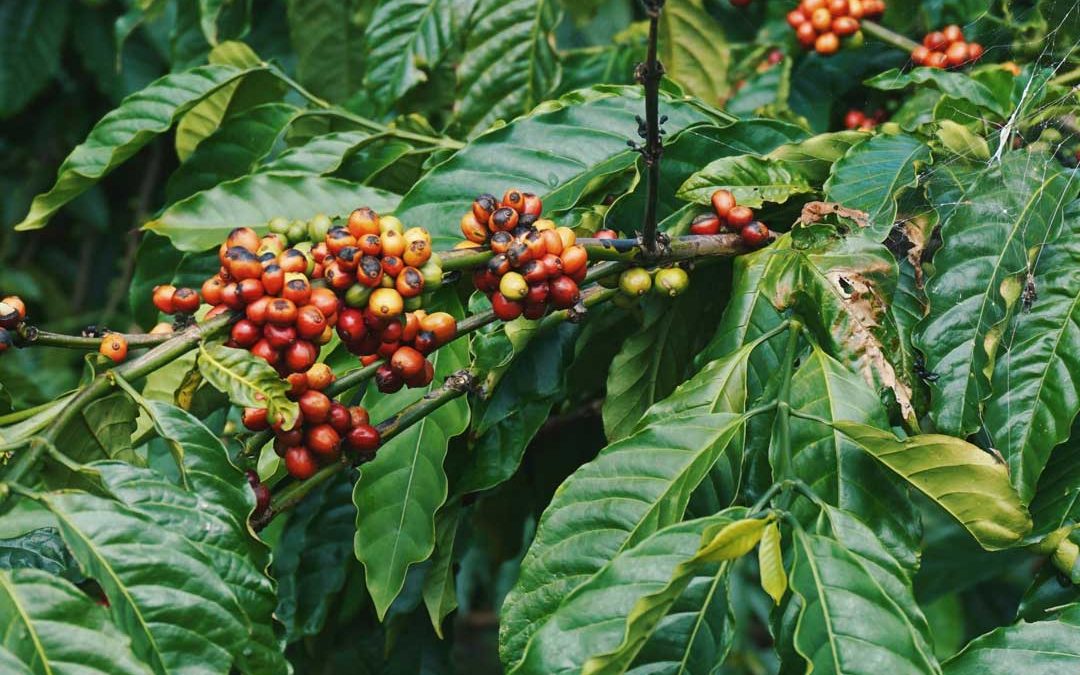
Sumatra coffee varieties are one of the least understood parts of the island’s coffee story. Buyers usually talk about Sumatran coffee by region, such as Mandheling, Gayo or Lintong, but each of those lots is made up of the actual plants growing on the farms: Tim Tim, Ateng, Sigarar Utang, S795, old Typica trees and more. Most farms grow several of them side by side, and most export lots blend them together.
Knowing the varieties helps you understand why a Sumatran coffee tastes the way it does, why two lots from the same area can differ, and what to ask your supplier. This guide covers the main Arabica varieties grown in Sumatra, where they came from, how they behave on the farm, and what they bring to the cup, along with a short look at the Robusta grown on the island.
Sumatra coffee varieties at a glance
| Most common Arabicas | Tim Tim, Ateng, Sigarar Utang, S795 |
| Older and heirloom types | Typica, Abyssinia, Bourbon-related lines |
| Aceh specialties | Gayo 1, Gayo 2, Borbor, P88 |
| North Sumatra specialty | Sigarar Utang, the fast-bearing “debt payer” |
| Robusta | Grown from selected clones, such as BP42 and BP358 |
| How lots are sold | Usually by region and grade, with varieties mixed |
Why Sumatra grows so many varieties
Arabica first came to Sumatra in the 19th century as Typica, the same old stock the Dutch planted across Java. In the late 1800s, coffee leaf rust swept through Indonesia and destroyed most of it. Since then, Indonesian farmers and researchers have kept introducing and selecting new varieties that can resist disease, yield well and cope with Sumatra’s climate.
Many of today’s Sumatran varieties carry genes from the Timor Hybrid, a natural cross between Arabica and Robusta found on the island of Timor. That Robusta heritage gives them resistance to leaf rust. Other varieties came from Ethiopia and India. Wikipedia’s list of coffee varieties shows how these families relate to coffees grown elsewhere in the world.
The main Arabica varieties in Sumatra
| Variety | Background | On the farm | Where you’ll find it |
|---|---|---|---|
| Tim Tim | Timor Hybrid (Arabica × Robusta) | Rust resistant, reliable | Across Aceh and North Sumatra |
| Ateng | Catimor type, selected for short height | Compact, easy to pick, disease resistant, high yield | Widely planted across Sumatra |
| Sigarar Utang | Arabica × Timor Hybrid selection | Very fast to bear fruit, productive | North Sumatra, around Lake Toba |
| S795 | Bred in India in the 1940s | Productive, balanced | Across Indonesia |
| Typica | The original Arabica brought by the Dutch | Low yield, rust prone | Small pockets at high altitude |
| Abyssinia | Ethiopian stock introduced in 1928 | Typica-like plant | Scattered plantings |
| Gayo 1 and Gayo 2 | Local selections from Timor Hybrid lines | Adapted to the Gayo highlands | Aceh |
| Borbor | Timor Hybrid × Bourbon | Valued locally for berry borer resistance | Aceh |
| P88 | Catimor selection, brought to Gayo in 1989 | Productive, rust resistant | Aceh |
Tim Tim
Tim Tim is the local name for the Timor Hybrid, also known as Hibrido de Timor. It’s a spontaneous cross between Arabica and Robusta that appeared on the island of Timor and gave coffee growers their first strong defense against leaf rust. On Sumatra it’s one of the backbone varieties, especially in the Gayo Highlands, where it’s valued for good cup quality.
Ateng
Ateng is a Catimor, a family that descends from crossing the Timor Hybrid with the compact Caturra variety. Farmers like it because the plants stay short, which makes picking easier, and they resist disease and yield well. You’ll hear names like Ateng Super and Ateng Jaluk. It’s one of the most widely planted varieties in Sumatra, though it’s generally not seen as the variety with the highest cup potential.
Sigarar Utang: the “debt payer”
Sigarar Utang is North Sumatra’s own variety, associated with the highlands around Lake Toba, including Humbang Hasundutan and Samosir. Its name comes from the Batak language and roughly means “debt payer.” The story is simple: it starts bearing fruit much sooner than many other varieties, often within about a year and eight months of planting, so farmers could start earning and pay off their debts faster.
Genetically, it’s an Arabica crossed with the Timor Hybrid, and tests suggest it’s closely related to Ateng. It’s now common in many North Sumatran farms, and it ends up in plenty of coffee sold as Mandheling and Lintong.
S795
S795 was bred in India in the 1940s and reached Indonesia in the 1950s. It’s one of the most widely planted Arabicas in India and Southeast Asia, and you’ll sometimes see it called Jember or Lini S in Indonesia. It’s known for a balanced cup, often with soft chocolate or mocha notes.
Typica and other heirloom types
A few old Typica trees survived the rust outbreaks in high, isolated areas, and names such as Sidikalang and Bergendal are still linked to them. Ethiopian introductions like Abyssinia and USDA 762 also reached Indonesia in the 20th century. These older types are rare today but sometimes appear in micro-lots.
Gayo’s local varieties
The Gayo Highlands of Aceh have their own set of selections, including Gayo 1, Gayo 2, Borbor and P88, alongside Tim Tim and Ateng. That mix is part of what gives Gayo coffee its character. Our guide to Gayo coffee covers the region in detail.
Do varieties change the taste?
Yes, but in Sumatra the variety is only one part of the picture. Processing, especially wet hulling, and altitude have a big effect on the cup, and because lots usually mix several varieties, the regional style tends to come through more than any single variety.
The differences are real, though. A 2021 study in the International Journal of Food Science by Happyana and colleagues analyzed the green beans of Indonesian Arabica varieties including Ateng and Sigarar Utang. Each variety had its own chemical profile: Ateng was richer in compounds such as trigonelline, sucrose and chlorogenic acid, while Sigarar Utang stood out for quinic acid. The study also confirmed that Ateng and Sigarar Utang are closely related.
For roasters, the practical point is this: if you find a Sumatran lot you love, ask which varieties it contains. When you reorder, a similar variety mix from the same area is your best chance of a similar cup. Our guides to coffee processing and coffee cupping explain the other factors to look at.
Robusta varieties in Sumatra
Robusta is grown differently. Instead of named varieties grown from seed, many farms plant selected clones, chosen for yield, bean size and resistance to pests. Around Sidikalang in North Sumatra, clones such as BP42 and BP358 are part of the Robusta we source, grown at around 1,000 meters above sea level. Read more in our guide to Sumatra Robusta, and see how the two species compare in our Arabica vs Robusta guide.
Sumatra also grows a little Liberica, a third coffee species. Our post on Liberica coffee explains how it differs.
Which Sumatra coffee varieties are in our lots?
Like most Sumatran coffee, our lots are sold by origin and grade, and they bring together coffee from many smallholder farms. Our Gayo Arabica comes from partner farms growing varieties such as Bourbon, Tim Tim, Ateng, Super and Catimor. Our Mandheling and Lintong come from North Sumatra, where Sigarar Utang, Ateng, Tim Tim and S795 are common. Our Sumatra Robusta comes from Sidikalang.
| Coffee | Region | Varieties commonly grown |
|---|---|---|
| Arabica Gayo | Aceh | Tim Tim, Ateng, Bourbon types, Catimor |
| Arabica Mandheling | North Sumatra | Sigarar Utang, Ateng, Tim Tim, S795 |
| Arabica Lintong | North Sumatra | Sigarar Utang, Ateng, Tim Tim |
| Robusta Sumatra | Sidikalang, North Sumatra | Selected clones such as BP42 and BP358 |
Read more about each origin in our guides to Sumatra Mandheling coffee and Sumatra coffee regions, check grades in our guide to Indonesian coffee grades, or see everything we offer on our Coffee Offerings page.
Taste Sumatra’s varieties in the cup
Request samples of our Gayo, Mandheling, Lintong and Sumatra Robusta and compare them on your own cupping table.
Frequently asked questions
What are the main Sumatra coffee varieties?
The most common Arabica varieties in Sumatra are Tim Tim, Ateng, Sigarar Utang and S795. Aceh also grows local selections such as Gayo 1, Gayo 2, Borbor and P88, and a few old Typica trees survive at high altitudes.
What does Sigarar Utang mean?
It comes from the Batak language and roughly means “debt payer.” The variety bears fruit quickly, so farmers could start earning sooner and pay off their debts.
What is Tim Tim coffee?
Tim Tim is the Indonesian name for the Timor Hybrid, a natural cross between Arabica and Robusta that resists coffee leaf rust.
Is Ateng a good coffee variety?
Ateng is popular with farmers because it’s compact, productive and disease resistant. It’s not usually considered the highest quality variety, but well-grown and well-processed Ateng can still make a very good cup.
Do Sumatran coffee lots contain one variety?
Usually not. Most lots combine coffee from many small farms, each growing several varieties, so they’re sold by region and grade rather than by variety.
Which Robusta varieties grow in Sumatra?
Sumatran Robusta is often grown from selected clones. Around Sidikalang, clones such as BP42 and BP358 are grown.
CV. Buah Berdikari is a coffee trading and exporting company based in North Sumatra, Indonesia. We source Arabica and Robusta green coffee from North Sumatra and Aceh and help roasters and importers find the lots that fit what they’re making.