
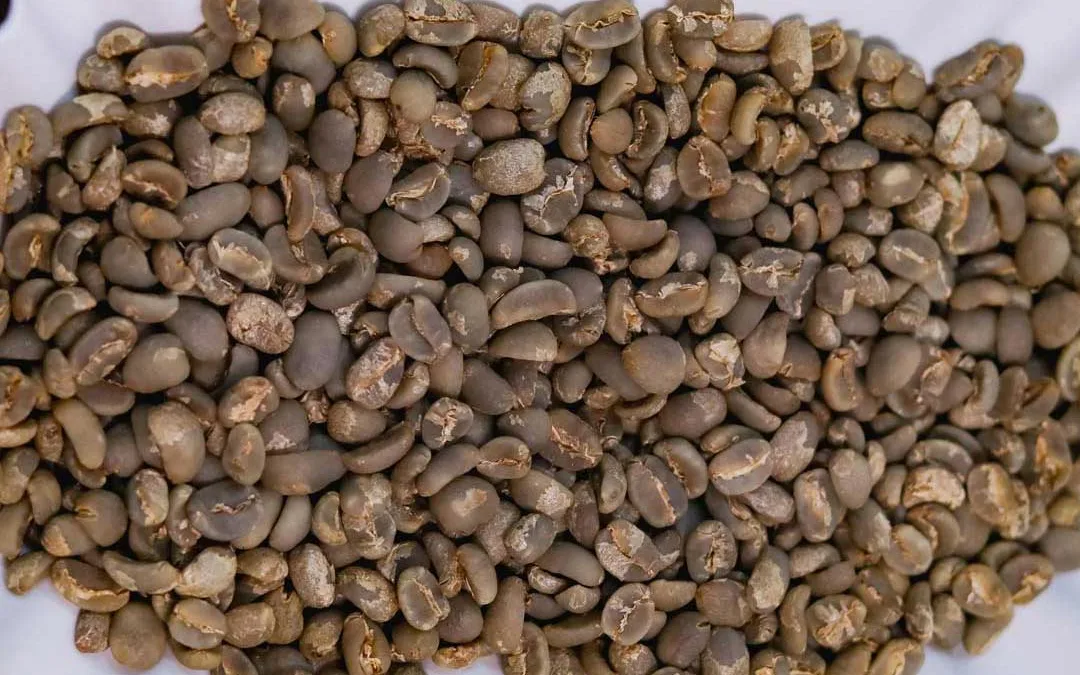
Lintong coffee comes from a high plateau just southwest of Lake Toba, the giant volcanic lake at the heart of North Sumatra. It’s one of Sumatra’s classic Arabicas, sharing the heavy body and earthy depth of its famous neighbor Mandheling, but with a character of its own: often more herbal and layered, with notes of cedar, cocoa and sweet tobacco. Many roasters buy it as a distinct single origin rather than as just another “Sumatra.”
Lintong is one of the North Sumatran coffees we offer, alongside Mandheling and our Sidikalang Robusta. This guide covers where Lintong coffee grows, what makes the area special, how the coffee is processed, how it tastes compared with Mandheling and Gayo, and what to check before you buy it as green coffee.
Lintong coffee at a glance
| Species | Arabica |
| Region | Lintong Nihuta and surrounding districts, Humbang Hasundutan, North Sumatra |
| Landscape | High plateau southwest of Lake Toba |
| Altitude | Roughly 1,000–1,500 masl |
| Common varieties | Sigarar Utang, Ateng, Tim Tim, older Typica lines |
| Process | Mostly wet hulled (giling basah) |
| Cup profile | Full body, low to medium acidity, herbal, cedar, cocoa, sweet tobacco, spice |
| Export port | Belawan, Medan |
Where Lintong coffee grows
The name comes from Lintong Nihuta, a district in Humbang Hasundutan Regency on the southwestern side of Lake Toba. The lake fills the caldera of an ancient supervolcano, and the land around it is high, cool and covered in rich volcanic soil. Coffee sold as Lintong usually comes from Lintong Nihuta and nearby areas such as Dolok Sanggul, Paranginan and Pollung.
Arabica has grown near Lake Toba since the late 1800s, among the first Arabica plantings on Sumatra. Today the area is dominated by smallholder farmers, many of them Batak, who grow coffee on small family plots, often alongside other crops. It’s a significant producing area, with output estimated at around 15,000 to 18,000 tonnes of Arabica a year.
Altitude is a big part of the story. Most Lintong coffee grows between about 1,000 and 1,500 meters. A study in Jurnal Pertanian Tropik by Harahap and colleagues (2022) compared coffee from several North Sumatran geographic indication areas and found that Lintong’s soils and altitude are very well suited to Arabica. Its sample also had the lowest acidity of the coffees they tested, which fits the smooth, rounded cup Lintong is known for.
Varieties grown around Lintong
Like the rest of North Sumatra, Lintong is a mix of varieties rather than a single one. The most common include:
- Sigarar Utang: North Sumatra’s own fast-bearing variety, widely planted in Humbang Hasundutan. Its name means “debt payer” in Batak because it starts producing so quickly.
- Ateng: a compact, productive Catimor type that’s easy to pick.
- Tim Tim: the Timor Hybrid, valued for its resistance to leaf rust.
- Typica lines: older Arabica stock that still survives in some higher farms.
Most export lots blend coffee from many farms, so they combine several varieties. That’s why Lintong is usually sold by region and grade, not by variety.
How Lintong coffee is processed
Most Lintong coffee is wet hulled, the processing method that defines Sumatran Arabica. Farmers pulp the cherries, ferment and wash them briefly, and dry the parchment coffee partway. Collectors then strip off the parchment while the beans are still damp and dry them again, down to around 12% moisture. This gives the green beans their dark, bluish-green color and the cup its heavy body and low acidity.
Some producers in the area also make fully washed lots, which taste cleaner and a little brighter. Our guide to coffee processing explains how wet hulling compares with other methods.
What Lintong coffee tastes like
Lintong has the full, syrupy body you’d expect from Sumatra, with low to medium acidity and a long finish. What sets it apart is complexity. Good lots layer herbal and woody notes, like cedar and sweet tobacco, over cocoa and brown sugar, often with a little spice. Compared with Mandheling, it’s usually less purely earthy and more aromatic.
Lintong vs Mandheling vs Gayo
Lintong, Mandheling and Gayo are Sumatra’s three best-known Arabicas. They share a family resemblance, but each has its own style.
| Lintong | Mandheling | Gayo | |
|---|---|---|---|
| Region | Lake Toba, North Sumatra | North Sumatra highlands | Gayo Highlands, Aceh |
| Body | Full, syrupy | Very heavy | Full, syrupy |
| Acidity | Low to medium | Low to medium | Medium, often citrusy |
| Typical notes | Cedar, cocoa, herbal, sweet tobacco | Dark chocolate, earthy, cedar | Chocolate, spice, orange, caramel |
| Style | Herbal and layered | Deep and earthy | Cleaner and brighter |
Read our full guides to Sumatra Mandheling coffee and Gayo coffee, or see how all the island’s origins fit together in our overview of Sumatra coffee regions.
Buying Lintong green coffee
When you buy Lintong, these questions help you compare offers:
- Which area? Lintong Nihuta, Dolok Sanggul or a wider Humbang Hasundutan blend.
- Which process? Wet hulled or fully washed. They taste noticeably different.
- Which grade? Grade 1 Triple Pick is the top export preparation. See our guide to Indonesian coffee grades.
- Moisture and crop year. Around 12% moisture and the most recent harvest.
- A sample. Always cup before you commit. Our guides to green beans coffee sampling and coffee cupping show how.
Our Lintong coffee
| Item | Details |
|---|---|
| Origin | Lintong, Humbang Hasundutan, North Sumatra |
| Species | Arabica |
| Grades and process | Ask us for current lots |
| Packing | 60 kg jute bags |
| Price terms | FOB, CFR, CIF (negotiable) |
| Payment | L/C or bank transfer |
| Loading port | Belawan, Medan |
If you’re buying from Indonesia for the first time, our guides on how to import coffee from Indonesia and on FOB vs CIF shipping terms cover the whole process. You can see all our origins on the Coffee Offerings page.
Cup our Lintong coffee
Request a sample of Lintong Arabica from the Lake Toba highlands and taste it in your own roastery.
Frequently asked questions
What is Lintong coffee?
Lintong coffee is Arabica grown around Lintong Nihuta in Humbang Hasundutan, on the high plateau southwest of Lake Toba in North Sumatra, Indonesia.
What does Lintong coffee taste like?
Full bodied with low to medium acidity, and layered notes of cedar, cocoa, herbs, sweet tobacco and spice.
What is the difference between Lintong and Mandheling?
Both are wet hulled North Sumatran Arabicas. Lintong comes from a specific area near Lake Toba and is usually more herbal and aromatic. Mandheling is a broader trade name and tends to be deeper and earthier.
How high is Lintong coffee grown?
Mostly between about 1,000 and 1,500 meters above sea level.
Is Lintong coffee wet hulled?
Most of it is. Wet hulling gives Lintong its heavy body and low acidity, although some fully washed lots are also produced.
Is Lintong coffee good for espresso?
Yes. Its body, sweetness and cocoa notes make it a strong single origin espresso and a good base for blends.
CV. Buah Berdikari is a coffee trading and exporting company based in North Sumatra, Indonesia. We source Arabica and Robusta green coffee from North Sumatra and Aceh and help roasters and importers find the lots that fit what they’re making.